


Reef-Safe Sunscreen for Sailing in Greece: Protect Your Skin and the Ionian Sea
If you’ve ever sailed with us aboard Katja, you’ve probably heard the question:
“Have you put on sunscreen today?”
And if we’re honest, you’ve probably heard it more than once.
Life aboard a sailing yacht means spending hours under the Mediterranean sun. Whether we’re sailing between islands, snorkelling in a secluded bay, paddleboarding, or simply relaxing on deck, UV exposure is part of every day.
That’s why sun protection is something we take seriously.
But over the last few seasons, another question has become just as important:
“Is your sunscreen reef-safe?”
Many guests tell us they’ve never thought about it before. Others have heard the term but aren’t quite sure what it means. Yet almost everyone agrees on one thing: if there’s an easy way to better protect the sea we’re enjoying, it’s worth knowing about.
Why We Started Talking About Reef-Safe Sunscreen
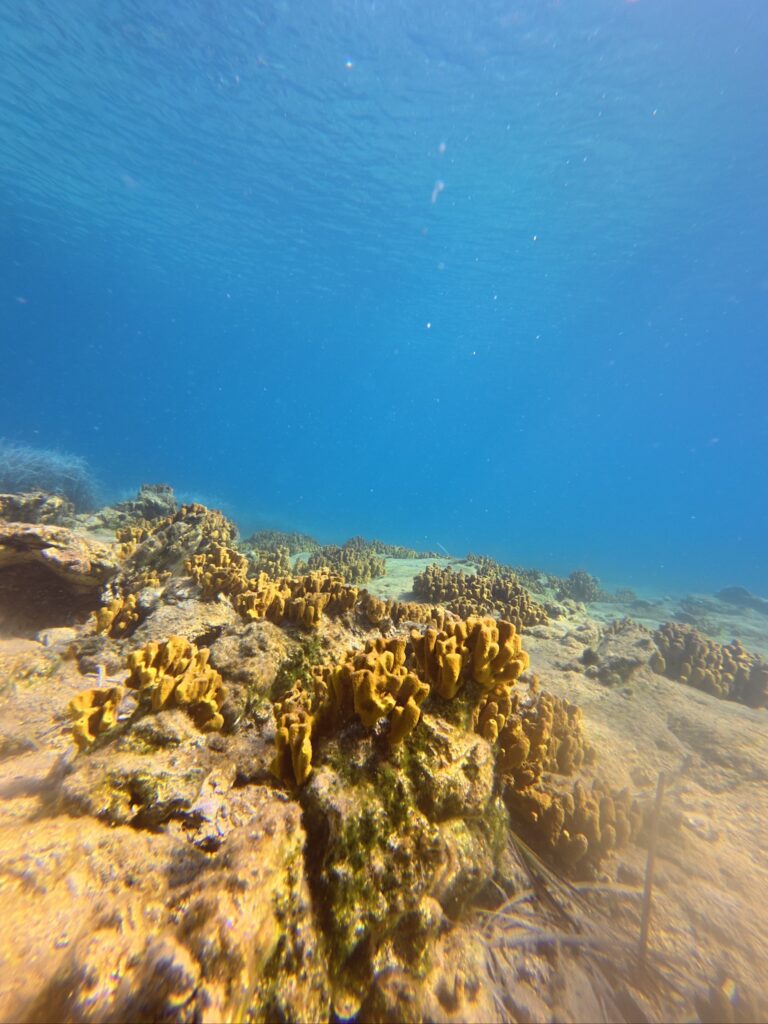
As sailors, divers, and lovers of the sea, we spend a lot of time in the water. We swim in remote bays, snorkel over seagrass meadows, and anchor in places where the water is so clear that you can see the anchor resting on the seabed.
At the same time, we also care deeply about protecting our skin.
Skin cancer is one of the most common forms of cancer worldwide, and the Greek summer sun can be surprisingly unforgiving. If you’ve sailed with us before, you’ll know that we’re not shy about reminding guests to reapply sunscreen, wear a hat, and stay hydrated.
Protecting yourself from UV radiation should always be the first priority.
The good news is that protecting your skin and making environmentally conscious choices don’t have to be mutually exclusive.

Why Does Sunscreen End Up in the Sea?
The answer is simple. We apply sunscreen and then jump into the water.
Even the best sunscreen gradually washes off our skin. When thousands of swimmers, sailors, divers and beachgoers do the same thing every day, sunscreen ingredients inevitably enter coastal waters.
Scientists have spent years studying how various sunscreen ingredients behave in aquatic environments. Some UV filters have been linked to harmful effects on corals and other marine organisms under laboratory conditions. While climate change, habitat destruction and pollution remain far larger threats to marine ecosystems, sunscreen ingredients have attracted enough concern that some destinations around the world have restricted certain substances.
The two ingredients most commonly highlighted by environmental organisations and researchers are:
- Oxybenzone (Benzophenone-3)
- Octinoxate (Ethylhexyl Methoxycinnamate)
It’s worth noting that research in this field is still evolving. Not every claim you read online is equally well supported, and the term “reef-safe” itself has no universally accepted legal definition.
Why This Matters in Greece
A common question is:
“But there aren’t tropical coral reefs in the Ionian Sea, so why should I care?”
That’s a fair point.
However, aquatic ecosystems are interconnected. Before turning our passion into a sailing business, one of us spent many years researching freshwater ecosystems. Although freshwater ecology and marine biology are different fields, they share one important lesson: once chemicals enter aquatic ecosystems, they rarely stay where we intended them to.
Research into sunscreen ingredients has looked not only at corals but also at algae, plankton, fish and other aquatic organisms. The science is still developing, but reducing unnecessary chemical inputs into the waters we enjoy is a sensible precaution.
For us, this isn’t only about coral reefs in Hawaii.
It’s about taking reasonable care of the places we visit and love here in Greece and around the world.

The Most Important Rule: Protect Your Skin First
Environmental considerations should never come at the expense of effective sun protection.
The best sunscreen is the one that:
- Protects you from harmful UV radiation
- Encourages regular reapplication
- Stays on your skin when you need it
- Fits your lifestyle and activities
For most sailing holidays in Greece, we recommend:
- SPF 30 or SPF 50+
- Broad-spectrum UVA and UVB protection
- Water-resistant formulations
- A wide-brimmed hat
- UV-protective clothing
- Plenty of drinking water
If you’re getting sunburned, you’re doing more harm to yourself than any sunscreen ingredient is likely doing to the environment.
Why We Recommend Water-Resistant Sunscreen
One recommendation we make to every guest aboard Katja is simple:
Choose a water-resistant sunscreen.
Life on a sailing yacht is unpredictable:
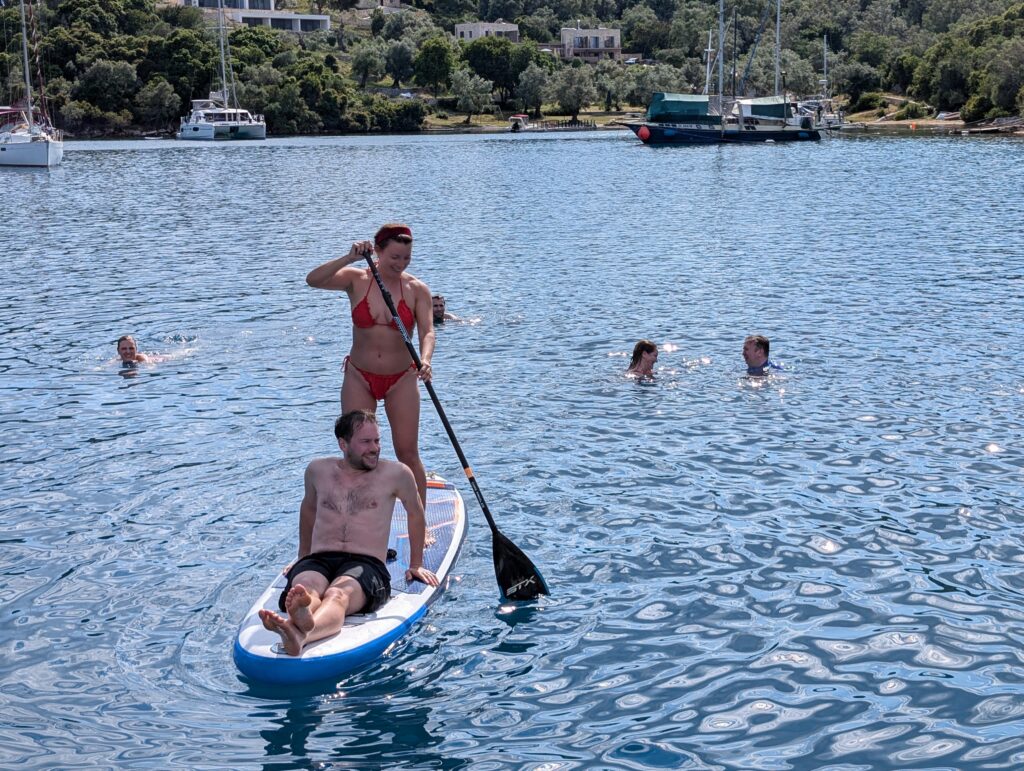
We anchor in a beautiful bay. Someone spots fish. Five minutes later everybody jumps in.
That’s why we insist on water-resistant sunscreen.
Water-resistant sunscreens generally provide more reliable protection during swimming, snorkelling and water sports. They also reduce the need for constant reapplication and may help reduce the amount of sunscreen immediately washing into the sea.
For us, water resistance is every bit as important as choosing environmentally preferable ingredients.
How to Check Whether Your Sunscreen Is Reef-Safe in 60 Seconds
Because the term “reef-safe” isn’t regulated, we prefer looking at ingredients rather than marketing claims.
Here’s our simple process:
Step 1: Find the Ingredient List
Most manufacturers and retailers publish complete ingredient lists online.
Step 2: Check for Oxybenzone and Octinoxate
These are the ingredients most commonly associated with environmental concerns.
Look for:
- Oxybenzone (Benzophenone-3)
- Octinoxate (Ethylhexyl Methoxycinnamate)
Step 3: Choose a Water-Resistant Product
Especially if you’re planning to swim, snorkel or dive.
Done.
The entire process takes less than a minute once you’ve done it once or twice.
Which Sunscreens Do We Use?
Many articles recommend mineral sunscreens containing zinc oxide or titanium dioxide, and they can certainly be a good option.
Personally, we often use modern sunscreen formulations that avoid ingredients such as oxybenzone and octinoxate while still providing excellent protection and a more pleasant feel on the skin.
At the time of writing, brands such as Jean & Len offer products that avoid these ingredients. Some Hawaiian-inspired brands have also built their reputation around avoiding ingredients that have attracted environmental concern.
However, formulations change regularly.
That’s why we recommend checking the ingredient list rather than trusting a brand name alone.
Why We Prefer Lotions Over Sprays
This recommendation has less to do with marine biology and more to do with life aboard a sailing yacht.
Whenever possible, we prefer traditional sunscreen lotions over aerosol sprays.
Part of the reason is simple practicality. On a windy day, spray sunscreen rarely lands exactly where you intend it to. Some of it inevitably drifts away, whether onto the deck, cockpit cushions, sails, or directly into the air.
Over time, sunscreen overspray can contribute to slippery surfaces and may leave marks or discolouration on boat equipment and upholstery. More importantly, any sunscreen that doesn’t end up on your skin isn’t helping to protect you from the sun.
For that reason, we generally recommend applying sunscreen lotions carefully and thoroughly. They tend to stay where they’re needed most: on your skin.
Our Pre-Holiday Sunscreen Checklist
Before packing for your sailing holiday in Greece:
✓ SPF 30 or higher
✓ Broad-spectrum UVA/UVB protection
✓ Water-resistant
✓ Check for oxybenzone and octinoxate
✓ Pack a hat and UV-protective clothing
✓ Reapply regularly
Small Choices Matter
Most of our guests aren’t marine biologists, environmental campaigners, or chemistry experts.
They’re simply people who love being on the water.
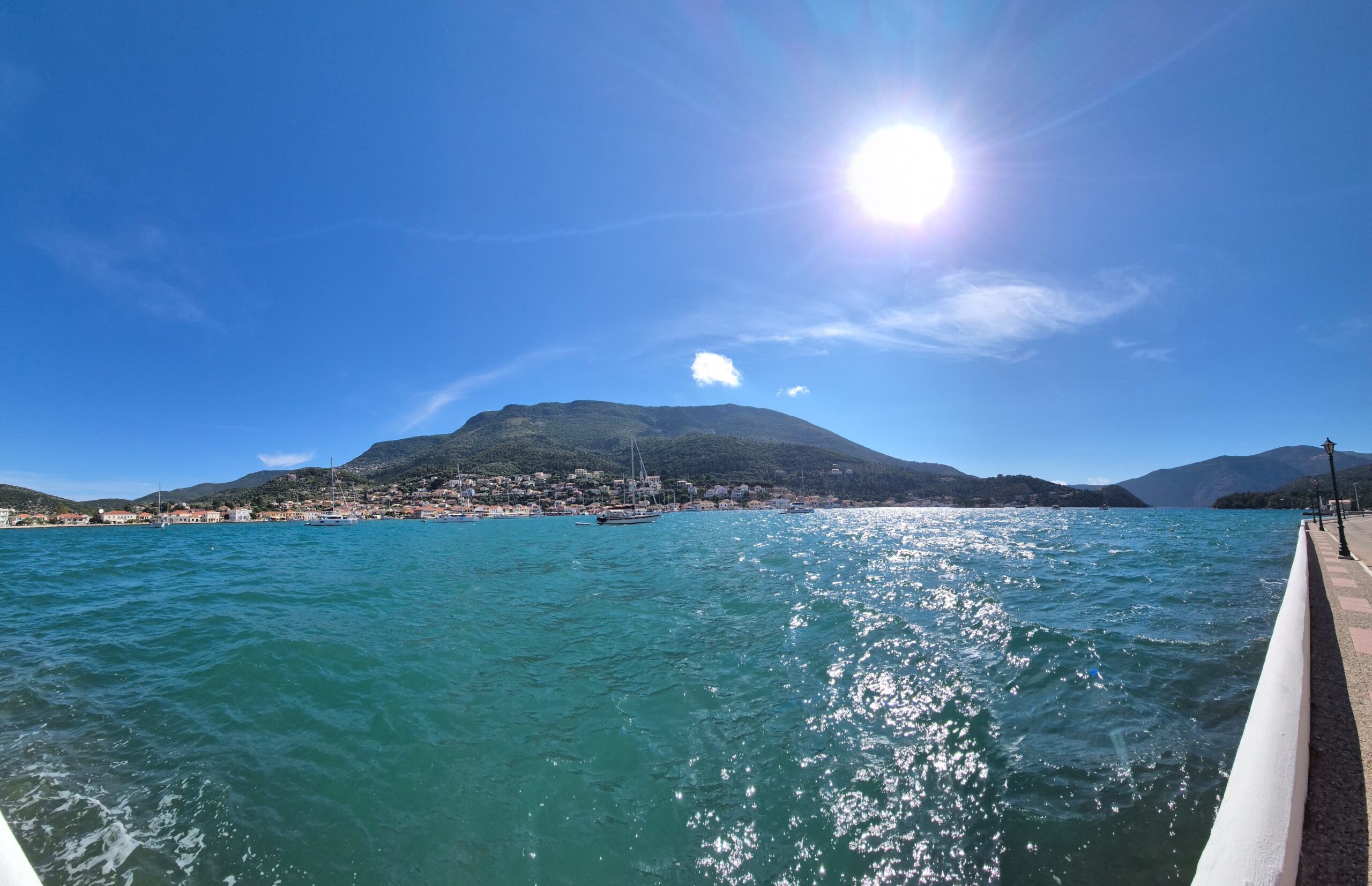
When you’re floating in a quiet Ionian bay, watching fish beneath the boat and enjoying some of the clearest water in the Mediterranean, it feels natural to ask how we can help keep it that way.
If you’re joining us aboard Katja, you don’t need to become an expert on sunscreen chemistry. We simply want to help you make informed choices, so you can enjoy your sailing holiday while leaving these beautiful places just as you found them.
No sunscreen is perfect.
No single purchase decision will save the ocean.
But choosing effective sun protection while reducing unnecessary environmental impact is a simple step that benefits both you and the places we love to sail.
And if you’re joining us aboard Katja, don’t be surprised if we ask whether you’ve applied sunscreen today.