



If you’ve ever thought about a vacation on the water, you will soon be confronted with the many ways to travel and spend time and money on this kind of holiday. From huge cruise ships to sporty sailing yachts to comfortable catamarans, each style offers a completely different experience.
This guide breaks down the key differences in comfort, flexibility, cost, and (something many people forget) how much participation is expected from guests. Let’s dive in to help you find the option that best fits your travel style.
1. The Overall Experience
Cruise Ships: Floating Cities on a Fixed Route
Cruise ships offer a classic “hotel on the water” feeling. Depending on the cruise, you’ll find pools, entertainment, restaurants, bars and hundreds or possibly thousands of fellow passengers. Everything is designed for maximum convenience: you rarely feel the sea, and the itinerary is fixed.
The on-board services make leaving the ship optional. If you do want to explore the destinations, you can pay extra for guided tours that show you the must-see locations.
Best for: travellers who want full comfort, zero surprises, and plenty of amenities.
Monohull Sailing Boats: Sporty, Authentic, Adventurous
A sailing yacht offers the most traditional form of travel at sea. It’s more intimate, more physical, and more exposed to wind and waves. The boat moves, leans, and sails exactly as you imagine a classic sailing trip would.
However, unless you pay extra for a hired skipper, one of the crew must be certified and able to skipper the boat themselves.
Best for: people who love the idea of actively sailing, learning the ropes, or being part of the action.
Catamarans: Comfortable, Stable, and Close to Nature
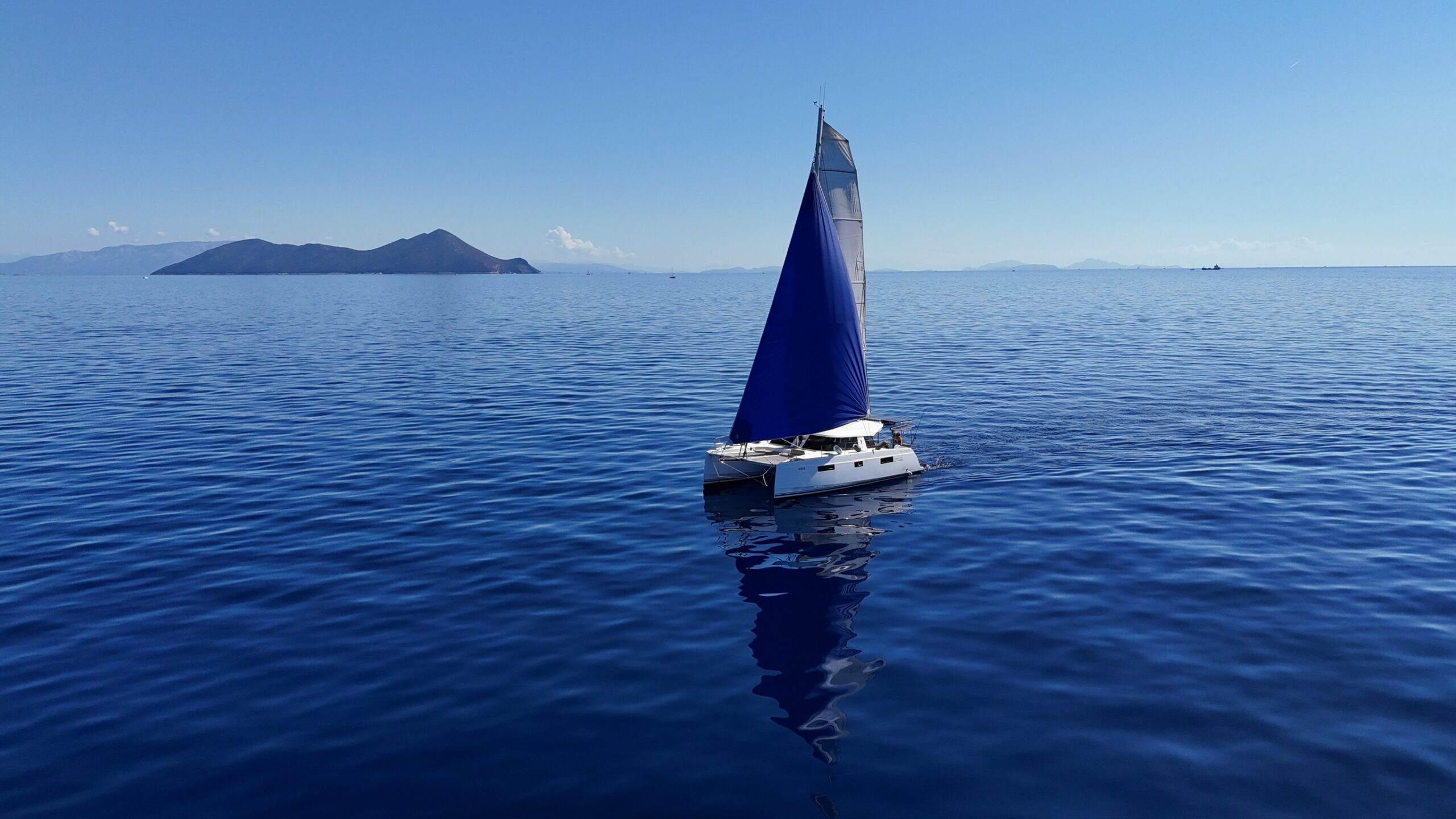
Catamarans are the sweet spot between comfort and adventure. With two hulls, they offer much more space and stability than monohulls. You’ll find wide decks, spacious private cabins with their own bathrooms, and big communal areas that offer more comfort than a monohull sailing boat. They can also anchor in small bays that cruise ships can’t reach.
Best for: travellers who want the feel of sailing without sacrificing comfort.
2. How Much Do Guests Need to Participate? (The Hidden Factor No One Talks About)
Most people don’t realise that different holiday types require very different levels of participation. This can make or break your week if you’re not prepared.
Here’s the real comparison:
Cruise Ships: 0% Participation — Everything Is Done for You
On a cruise ship, guests never interact with the workings of the ship. You don’t help with sailing, anchoring, cooking, cleaning, or navigation. Your only job is to enjoy.
Perfect if: you prefer to be a pure passenger.
Monohull Sailing Holidays: Medium to High Participation
On many monohull trips, especially bareboats or skipper-charter weeks, guests are expected to help.
That can mean:
- handling fenders and lines
- assisting during docking
- helping raise sails
- cooking together
- working as a team when mooring
If you want to save on costs and not hire a skipper, someone in the group must hold a sailing licence. In that case, choosing where to go, keeping track of weather conditions, and being in charge of itinerary, mooring, and safety falls on the shoulders of the designated skipper.
This can be fun, but it’s definitely more effort.
Perfect if: you want to be hands-on or actively learn sailing.
Skippered Catamaran Trips (like ours): Low Participation, High Visibility
This is where catamaran trips shine. Because catamarans are a little trickier to handle, the vast majority of trips are offered with a skipper who is in charge of safety on board.
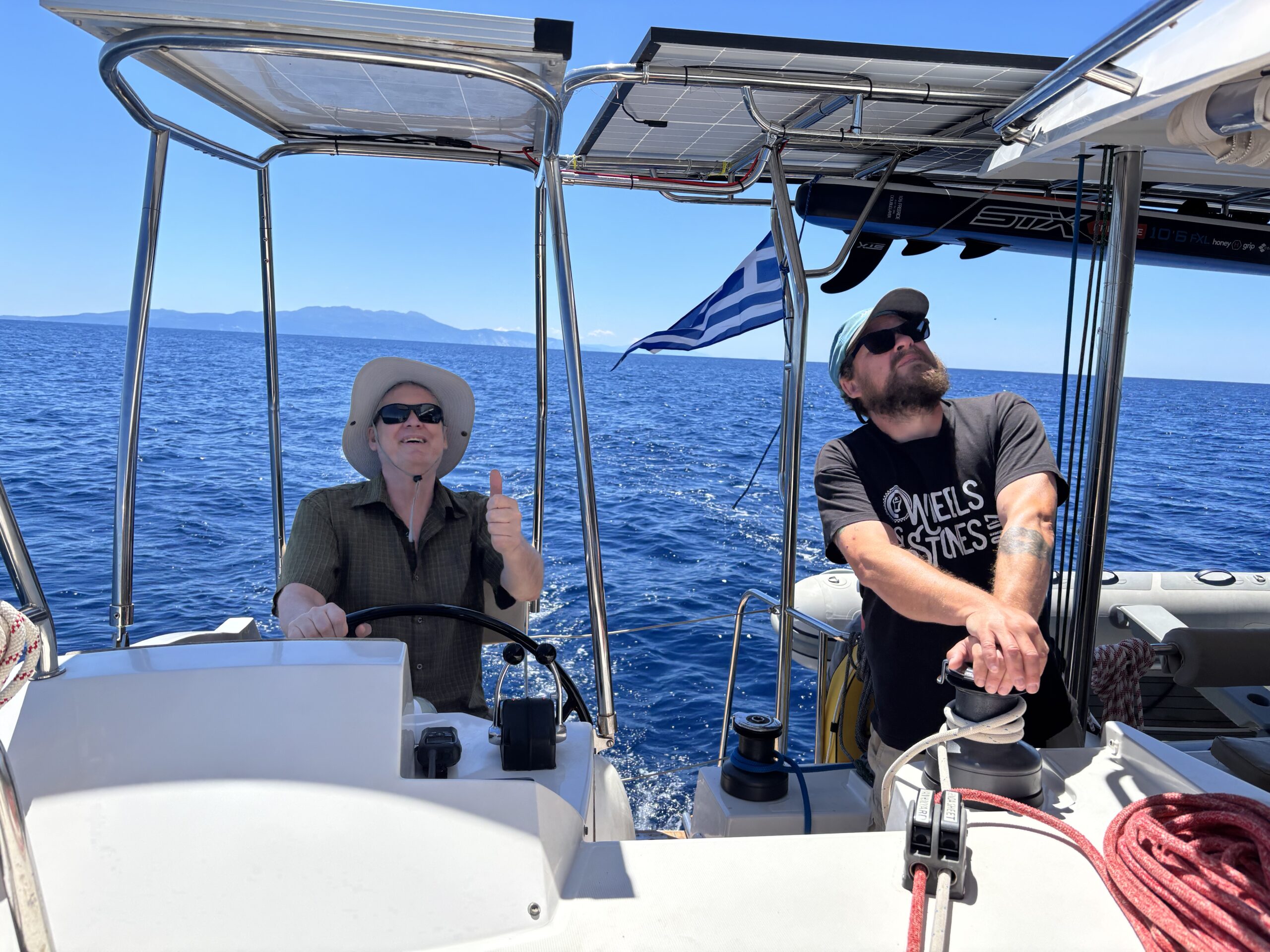
On our boat, you don’t need any experience. The skipper and crew handle navigation, anchoring, mooring, and all safety aspects. If guests want to help with something small, that’s always welcome — but nothing is expected.
You can watch everything from up close, ask questions, take part when you feel like it, or simply relax with a drink while the crew takes care of things.
Perfect if: you want to see and feel the sailing adventure without responsibility.
3. Comfort & Space
Cruise Ships
Because it’s a “hotel on the water,” there are few compromises on comfort, and moving around the ship is usually effortless thanks to elevators between decks.
- Huge cabins (sometimes)
- Pools, gyms, spa
- Air-conditioned restaurants and show lounges
- Zero waves thanks to stabilisers
The downside: you share this comfort with thousands of people.
Monohull Sailing Boats
The monohull experience can be described as “camping on the water,” as everything revolves around efficiency: from what you should bring, to how you stow things so they don’t fall out of cupboards, to crouching, bending and twisting when moving around the boat.
- Cosy cabins, often compact
- Limited deck space
- Shared bathrooms are common
- Boat leans during sailing → exciting for some, tiring for others
Catamarans
If the monohull is the equivalent of a tent in camping, the catamaran is a caravan. It’s still camping, but it feels more like an actual house than a boat. Moving around is much easier, and even underway, most of the deck area can be used for relaxing.
- Spacious cabins, often with en-suite bathrooms
- Wide outdoor lounging areas
- Very stable, barely any leaning
- Feels like a floating boutique apartment
4. Itinerary & Flexibility
Cruise Ships
You are bound by a fixed schedule, fixed ports, and timelines that can’t be changed. If you miss the departure, the ship will famously leave without you. And if you can’t find a cruise that visits that one city you’ve always wanted to see — no luck.
But it is great for someone who wants glimpses of famous destinations on their bucket list in one trip.
Monohulls and Catamarans
This largely depends on whether you have a skipper licence or hire a professional skipper.
If you or someone in your group is an experienced skipper, the trip can be as adventurous, far-reaching, slow or relaxed as you want it to be. A hired skipper will suggest an itinerary, which can easily be adjusted to the wishes of the crew.
Want a hidden bay? Want to stay somewhere longer? Very possible.
The only difference is the boat’s dependency on wind: while a monohull is really built for sailing and going from A to B under motor power can be quite slow, a catamaran is comfortable and similarly fast in either mode.
Sure, sailing is always best, but reaching that beautiful anchorage before everyone else and having more time for swimming, snorkelling and sightseeing is hard to beat.
5. Costs (The Short Version)
A longer cost breakdown deserves its own blog, but here’s the simple comparison:
- Cruise Ships: Often cheaper per day, but extras add up (drinks, excursions).
- Monohulls: Cheaper to charter, but expect extra costs (fuel, marina fees, skipper, food).
- Catamarans: More expensive upfront, but offer much more space and comfort and fewer hidden costs on small-group trips.
6. So What Should You Choose?
Here’s the quick cheat sheet:
| Style | Comfort | Participation | Flexibility | Ideal For |
|---|---|---|---|---|
| Cruise Ship | High | None | Low | Relaxed travellers who want entertainment and service |
| Monohull Sailing | Medium | High | High | Hands-on adventurers & sailing enthusiasts |
| Catamaran Trip | High | Low | High | Comfort-seekers who want adventure without effort |
A skippered catamaran trip gives you:
- the comfort of a hotel
- the intimacy of a private group
- the authenticity of real sailing
- the zero-stress approach of a guided holiday
If you’re curious what a week on our own catamaran Katja looks like, you can check out our behind-the-scenes blog here: A Week Aboard Katja.